
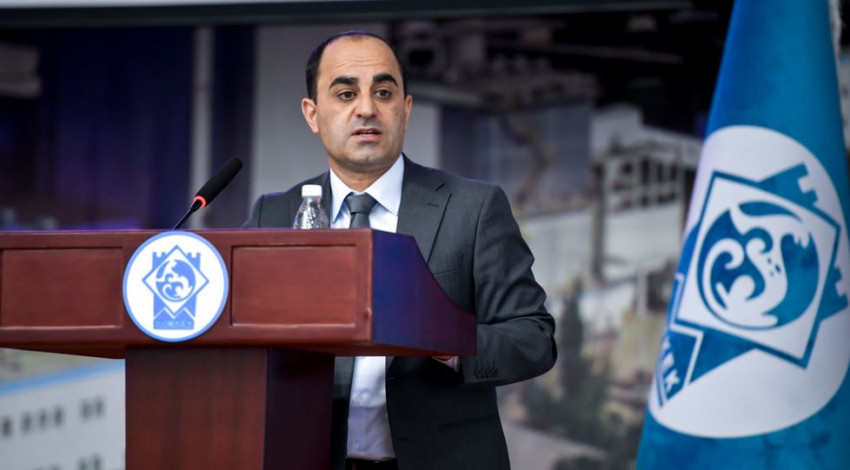
At a collegial meeting held at the Bishkek Combined Heat and Power Plant under the chairmanship of Mayor Aybek Junushaliev, measures to reduce air pollution in Bishkek were discussed.
It was noted that during the autumn-winter period of 2024/2025, the concentration of pollutants in the atmosphere significantly exceeded permissible limits, negatively affecting public health, the environment, and the city’s image.
Deputy Mayor Ramiz Aliev reported on ongoing efforts to reduce air pollution in the city.
According to data from UNEP, UNDP, UNICEF, the International Organization for Migration, the World Bank, and the ADB, the main sources of pollution are as follows:
Residential heating — 29%;
Transport — 27%;
Dust lifted by wind — 21%;
Emissions from CHPs and boiler houses — 11%;
Industrial enterprises — 2%.
Currently, there are 1,460 buses in Bishkek, including 1,340 running on gas and 120 electric buses.
As part of the adopted decisions at the Eco-Council, from October 15 to 30, 2025, activities will be held for the mass planting of more than 10,000 trees of various species.
A comprehensive plan is being developed to create a “green belt” around Bishkek.
The long-burning fire at the Bishkek sanitary landfill has been extinguished, contributing to a reduction in smog levels.
Construction is underway for a waste-to-energy plant on a 12-hectare site, with the following capacities:
Solid waste processing — up to 3,000 tons per day;
Maximum electricity production — 24,000 kWh.
To date, 22 municipal boiler houses have been successfully converted from coal to natural gas, reducing annual coal consumption by 3.6 tons.
The Interdepartmental Commission on Air Quality will initiate the development of a mechanism for installing catalytic converters on private vehicles in Bishkek.
The Bishkek City Hall urges residents to comply with restrictions on the sale and use of loose coal under Mayor’s Decree №290 of October 9, 2025 “On Certain Measures for Air Protection.” These measures aim to reduce air pollution in the capital and include strict regulations on the sale, storage, and use of loose coal.
The Municipal Inspection has been tasked with strengthening control over waste burning, including monitoring the quality of coal being burned.
Following the deputy mayor’s report, officials were instructed to:
Strengthen control over coal-fired boiler houses and transition them to gas and electricity;
Monitor environmental standards at small businesses;
Suppress illegal sales of uncertified coal;
Conduct public awareness campaigns.
The Transport Department is tasked with increasing the number of eco-friendly buses and monitoring vehicle conditions.
The Social Development Department will develop measures to support low-income residents in transitioning to clean fuel.
The Department of Urban Services will regularly monitor air quality.